What Is the Best Way to Log Practice as a Self-Taught Adult Guitarist?
Without a teacher, the log is your feedback loop. Here is how adults learning on their own can set it up so it actually guides the next session.
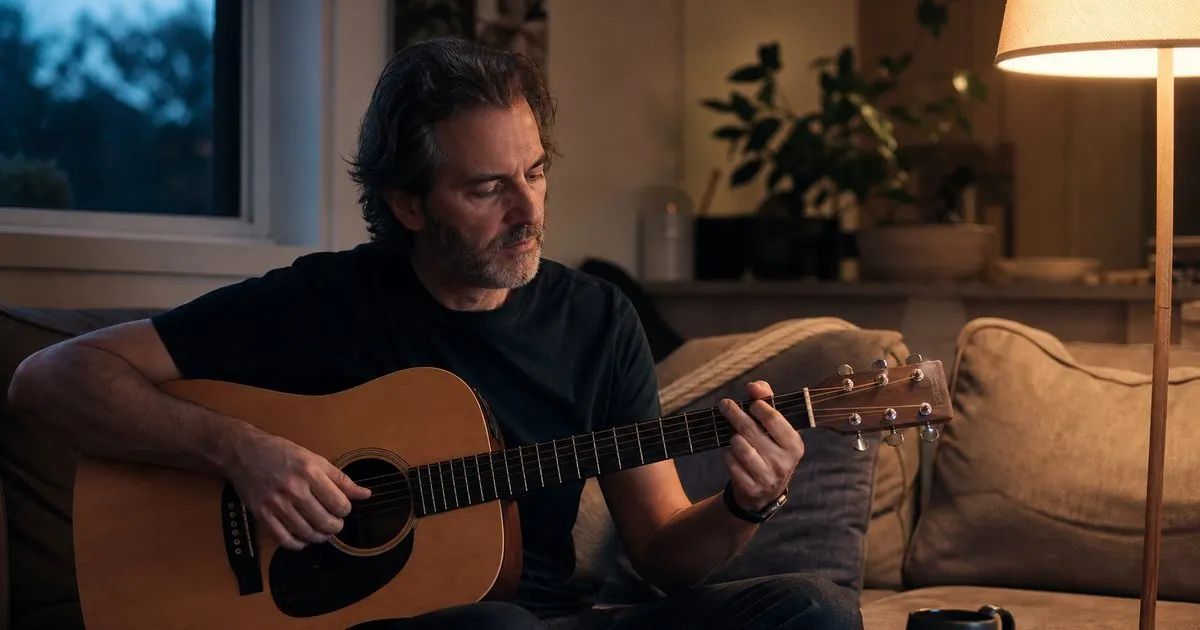
Decide what you are actually trying to learn
Adults who teach themselves usually have a mix of goals: play a few songs for friends, understand chords well enough to jam, improve fingerpicking, maybe learn to read a little. Without a teacher to narrow that down, the log needs to. Writing a short list of two or three concrete goals with a rough timeline at the top of the log, such as "play the whole song cleanly by October" or "switch between open chords without pausing," gives every session something to serve. Related: How Should a Music Teacher Set Weekly Practice Goals for Beginners?
This matters more for self-taught players than for students with lessons because nobody else is going to enforce direction. The most common pattern among adult learners is drifting between online lessons, new songs, and gear, with plenty of playing but little progress on any single skill. A goal list at the top of the log is the cheapest defense against that drift, and revisiting it monthly is the moment to prune goals that no longer fit.
Keep reading: How Can Students Build a Daily Practice Habit That Actually Sticks?, What Makes a Practice Streak Motivating Instead of Stressful for Young Learners?, Why Does Logging Practice Time Improve Progress in Music and Sports?. See how PracticeLoggr helps you music and sport practice logging for students.
Log the specific skill and the tempo, not just the song
"Practiced the song for thirty minutes" is not a useful entry. "Chorus chord changes at 70, still buzzing on the F, tried moving the thumb lower" is. The difference is that the second entry contains the skill being trained, the measurable level, the specific problem, and the attempted fix. That is the information a teacher would extract from watching you play, and since there is no teacher, you have to write it yourself.
Tempo is the easiest objective measure for a guitarist, and it applies to chord changes, strumming patterns, riffs, and scale passages alike. Using a metronome and logging the setting turns weeks of practice into a visible line of numbers. When that line stops climbing, it is a signal to change the approach, break the passage down further, or find a different explanation of the technique. Self-taught players who do not log tempo often spend months at the same level without noticing. Related: Why Does Logging Practice Time Improve Progress in Music and Sports?
Record yourself and log what you hear
The biggest disadvantage of learning alone is that you cannot hear yourself the way a teacher can. Recording a short clip once a week and writing down what you notice partially closes that gap. Adults are often surprised by timing problems, uneven dynamics, or string noise that they did not perceive while playing. A line in the log such as "recording: rushing the second bar of the intro, muting the high E on the D chord" turns that surprise into next week's target.
Keep the recordings and the notes together by date so you can compare across months. Hearing a clip from eight weeks ago next to today's is one of the few reliable sources of encouragement for a self-taught player, because progress on the guitar is gradual enough to be invisible from the inside. The log entry does not need to be detailed; a few honest observations per recording are enough to guide the next few sessions.
Review the log monthly and adjust the plan
A teacher would look at your progress every week and adjust the assignment. Without one, you need a fixed time to do that yourself. A monthly review, reading back through the entries and the recordings, answers a few questions: which goals moved, which stalled, which problems keep appearing, and whether the time spent matches the priorities. The review usually takes fifteen minutes and is the single most valuable session of the month. Related: What Should Coaches Look for When Reviewing a Student's Practice Log?
The output of the review is a small change to the plan: a new tempo target, a different exercise for a stubborn problem, a goal removed because it no longer matters, or a decision to seek a few lessons for a specific technique that is not responding to self-study. Many adult players find that a handful of lessons, focused on a problem the log has already identified, is far more efficient than open-ended weekly lessons. That is the role we designed PracticeLoggr to play for people practicing without a teacher: not a replacement for one, but the thing that makes every session, and every occasional lesson, count. Related: When Is Practice Quality More Important Than Total Minutes Logged?
- Write two or three concrete goals with rough timelines at the top of the log and review them monthly.
- Log the specific skill, the metronome tempo, the problem, and the fix attempted, not just the song.
- Record a short clip weekly and note what you hear so the log replaces some of a teacher's ears.
- Hold a monthly review to adjust the plan and decide whether a targeted lesson would help.

Julien Jimenez
Julien Jimenez is an independent software builder based in Paris. He designs, ships, and operates focused SaaS products for small businesses and independent professionals. Read the full author page.
Turn daily practice into visible progress
Music and sport practice logging for students. PracticeLoggr is built to help you put this into practice.
Start a practice logMore from the PracticeLoggr blog


Get the PracticeLoggr playbook
Practical guides on practice logging, straight to your inbox as we publish them. No spam, unsubscribe any time.