What Should a Student Do When Their Practice Log Shows Three Missed Weeks?
A gap in the log is not a failure, but the way a student restarts determines whether the gap becomes a month. Here is how to get back without the guilt spiral.
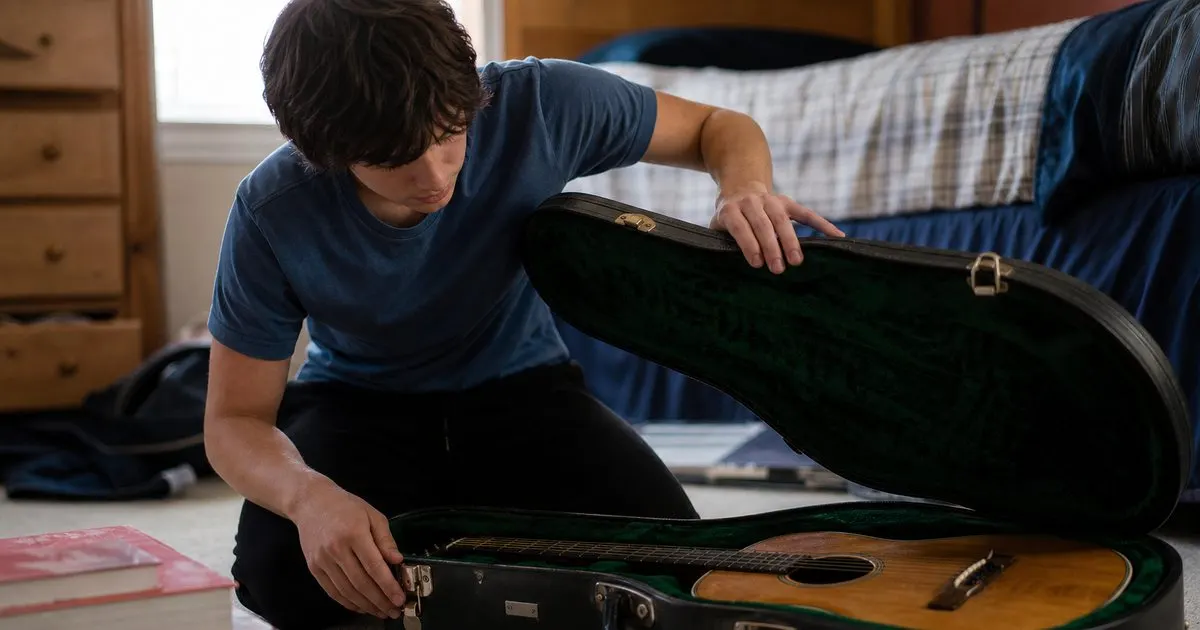
Do not try to make up the missed time
The instinct after a gap is to compensate with a marathon session, and that instinct is exactly what turns a three-week gap into a six-week one. A student who has not played for three weeks and then attempts two hours will find their fingers slow, their tone rough, and their motivation crushed by how far they seem to have slipped. The long session feels like punishment, and the next day they avoid the instrument again.
The better move is a deliberately short first session. Fifteen or twenty minutes of easy material, something the student already knows well, with no attempt at the hard piece they were working on before the gap. The goal of the first session back is to have played, log it, and end feeling like it was fine. Skills return faster than students expect once they are playing regularly again, and the first session is about restarting the habit, not recovering the skill.
Keep reading: How Can Students Build a Daily Practice Habit That Actually Sticks?, What Makes a Practice Streak Motivating Instead of Stressful for Young Learners?, Why Does Logging Practice Time Improve Progress in Music and Sports?. See how PracticeLoggr helps you music and sport practice logging for students.
Look at why the gap happened before deciding what to change
Three missed weeks almost always have a cause, and the log often shows it. Perhaps the entries stopped right when a sport season started, or during exams, or after a lesson that went badly. Sometimes the last few entries before the gap show declining focus notes or repeated frustration with the same passage. Reading those entries honestly tells the student whether the gap was a scheduling collision, a motivation problem, or a sign that the assignment was too hard.
Each cause has a different response. A scheduling collision needs a shorter, more realistic daily target during busy seasons. A motivation dip might mean adding a piece the student actually wants to play. A too-hard assignment needs a conversation with the teacher. Students who skip this diagnosis tend to restart with the same plan that failed, and the log fills with another gap a month later. Related: How Can Students Build a Daily Practice Habit That Actually Sticks?
Tell the teacher and reset the assignment together
Students often hide gaps from their teacher out of embarrassment, and then spend the next lesson pretending they practiced. Teachers know. A far better approach is to say plainly, "I did not practice for three weeks, here is why, and here is what I did this week to restart." Most teachers respond well to honesty and will adjust the assignment to match where the student actually is rather than where they were a month ago. Related: How Should a Music Teacher Set Weekly Practice Goals for Beginners?
If the log is shared with the teacher, the gap is already visible, and the student can use that visibility to their advantage by adding a note when they restart. A line like "back after exams, starting with scales and the first page only" tells the teacher exactly what to expect at the next lesson and turns an awkward moment into a plan. This is one of the reasons we built shared notes into PracticeLoggr: the hardest conversation is easier when it starts in writing.
Rebuild with a lower daily floor and a visible run of days
After a gap, the daily target should drop, sometimes drastically. A student who was aiming for forty-five minutes before the break might restart at ten. The number matters less than the fact that it is small enough to do on the worst day. Once the student has logged something on most days for two weeks, the target can climb back toward the previous level, but only if the habit is holding. Related: When Is Practice Quality More Important Than Total Minutes Logged?
A visible run of logged days helps here, as long as it is treated as information rather than pressure. Seeing seven straight entries after a three-week blank is genuinely motivating for most students. If the log tracks streaks, a restart is the moment to begin a new one without any reference to the old record. The old record is not lost; it is simply not what matters this month. Related: What Makes a Practice Streak Motivating Instead of Stressful for Young Learners?
- Restart with a short, easy session and do not try to make up the missed time.
- Read the entries before the gap to find out whether the cause was schedule, motivation, or difficulty.
- Tell the teacher directly and reset the assignment to match the student's current level.
- Lower the daily floor until the habit holds, then rebuild the target over a few weeks.

Julien Jimenez
Julien Jimenez is an independent software builder based in Paris. He designs, ships, and operates focused SaaS products for small businesses and independent professionals. Read the full author page.
Turn daily practice into visible progress
Music and sport practice logging for students. PracticeLoggr is built to help you put this into practice.
Start a practice logMore from the PracticeLoggr blog



Get the PracticeLoggr playbook
Practical guides on practice logging, straight to your inbox as we publish them. No spam, unsubscribe any time.